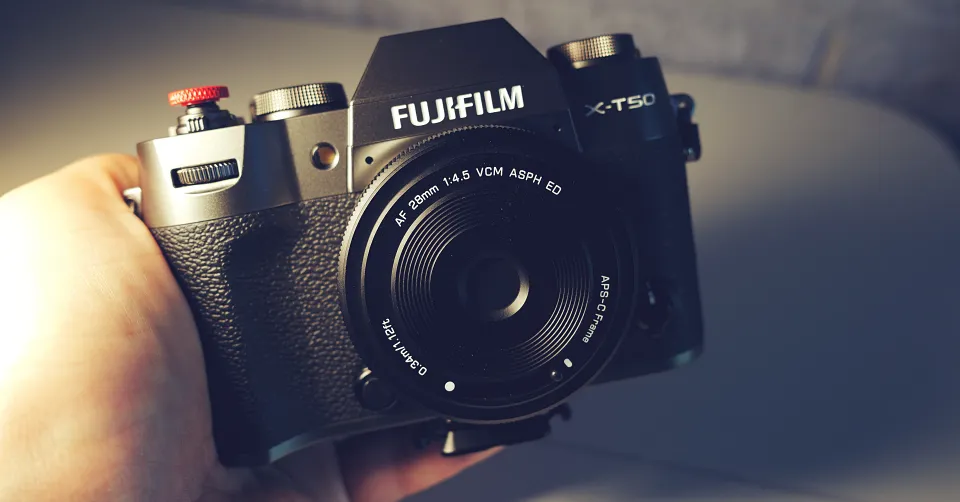
Fujifilm cameras are among the best sellers today. You see Fujifilm everywhere — on social media, TikTok, and various photography forums. I’d argue Fujifans have become something of a cult. Once, I called them “Fuji-zombies,” and surprisingly a lot of people liked the moniker.
By now, you’ve probably been overexposed to Fuji marketing, and as you’re reading this post, you may be considering one of their cameras as your next (or more likely the first) digital imaging device. But should you follow the hype, or can you make a more rational and informed decision?
Let me give you the short answer
There’s a reason Fuji has so many entry-level models and why they target beginners so aggressively. It pays off to target people buying their first camera. Why? Because someone buying their first camera is more likely to make an emotional rather than practical decision.
Even if the gods of marketing came down from heaven, they couldn’t make me buy a Fuji camera unless it truly met my criteria. Still, I must admit — Fuji’s marketing strategy is brilliant, and I take my hat off to them for it. But just because the marketing is good doesn’t mean you should automatically fall for it.
Let me show you what’s good and bad about Fujifilm cameras, and then you can decide whether the trade-offs are worth it. I also won’t leave you with problems only — I’ll give you viable alternatives so you can make an informed choice.
Let’s get into it.
Good things about Fuji cameras
One of the biggest selling points of Fuji cameras is the so-called “Fuji colors,” or more specifically, the film simulations, which can be further tweaked with recipes to achieve very specific looks. I must admit, I do love the colors produced by Fuji cameras, and I genuinely enjoy their film simulations. If you find a recipe you love, you can simply shoot in JPEG (or HEIF) and save yourself a lot of editing time.
Yes, editing is incredibly easy these days and often boils down to a click or two, but there’s still something satisfying about getting great SOOCs. If you haven’t heard the term before, SOOC means “Straight Out Of Camera.” In other words, the image is ready to print or share on social media immediately.
Another major strength of Fuji cameras is the design. Yes, Fujifilm cameras are beautiful. While I’m not a huge fan of their modern-styled bodies, I absolutely love their retro-inspired cameras. The X100VI is iconic, the X-E5 is gorgeous, the X-T50 looks fantastic, and even the entry-level X-T30 II is a very attractive camera. Unfortunately, this is where the positives mostly end for me.
The next stop is the not-so-good stuff — and while the list is long, I’ll try to keep it focused and meaningful with specific examples.
Mostly horrible LCD screens
Fujifilm X-M5
The X-M5 is a relatively recent, video-centric camera aimed at vloggers. It’s tiny and delivers very good image quality. However, it lacks an EVF.
For many people — especially the smartphone generation — an EVF may not seem important. But make no mistake: your iPhone has one of the best screens on the market. Even when shooting in direct sunlight, you can usually see everything clearly. The X-M5’s screen, on the other hand, looks washed out and dim. Even at higher brightness settings, it can be difficult to see properly outdoors. And because there’s no EVF, the LCD is your only framing option. So if you expect the LCD to be as usable as your smartphone, you’re out of luck.
Still, the X-M5 is a relatively cheap camera, so you could argue you get what you pay for. Fair enough. What surprised me more was seeing an even worse screen on the premium X-E5 — a camera costing nearly twice as much.
Fujifilm X-E5
The X-E5 “boasts” one of the worst LCDs in its class. Yes, it’s a 1.04M-dot panel, but the problem isn’t just the resolution. The screen lacks brightness, clarity, and color accuracy. To make matters worse, the screen mechanism itself feels under-engineered mechanically. I genuinely question how well it will hold up over time, and I suspect it may become one of the first failure points. Would you buy a camera that costs a month’s salary only to worry about durability after a year or two? Think about it.
Poor ergonomics
The X-M5 is cramped. The X-T30 II is cramped too. But those are very small cameras, so that’s somewhat understandable. You know what’s even smaller? The Ricoh GR — and somehow it still manages to offer excellent ergonomics.
Now let’s talk about the X-T50, which is larger and should theoretically feel better in the hand. Unfortunately, it doesn’t.
The placement of the Q button is genuinely terrible. It’s so bad that many Fuji users disable it entirely. Think about that for a moment: you paid for a feature you immediately turn off. The film simulation dial is also mostly useless because it lacks meaningful customization — at least on the X-T50 and X-M5. Fuji improved this somewhat on the newer X-E5, but then they created another issue: once you bring the camera to your eye and use the EVF, the dial becomes awkward to access. The irony is hard to ignore. The LCD is mediocre, but when you switch to the EVF, the controls become less practical. Bravo!
Poor battery life
Most compact Fuji cameras deliver disappointing battery life.
The X-T30 II is probably the exception because its newer processor improved efficiency compared to earlier versions. But cameras like the X100VI, X-E5, and X-T50 still burn through batteries surprisingly quickly. You could argue this isn’t a huge issue because spare batteries exist — and yes, that’s true. I carried extras myself when using Fuji cameras. Still, during a normal photowalk, you may find yourself swapping batteries more often than expected. Often this means missed shots.
QA problems
Fuji definitely seems to have quality assurance issues. There have been multiple reports of shutter problems on the X-T50, and unfortunately, my own unit experienced one. The camera froze completely with the shutter stuck midway. Nothing responded until I physically removed and reinserted the battery. Unfortunately, I missed several great shots of my child because of it. At one point during my holiday, I became so frustrated that I genuinely wanted to throw the camera into the ocean.
High ISO issues on 40MP sensors
The newer 40MP Fujifilm cameras — such as the X-E5, X-T50, X100VI, and X-T5 — can produce beautiful, highly detailed images. However, in low light and at higher ISO levels, they begin to struggle more than many people expect. My OM System OM-3, despite using a smaller Micro Four Thirds sensor, actually performs better in low light and higher ISOs. If you frequently shoot indoors, at night, or in difficult lighting conditions, this is something worth considering carefully. In some cases, Fuji’s older 26MP sensors may actually be the better choice.
Another downside of the 40MP sensor is file size. Personally, I don’t mind large files, but with storage prices constantly increasing, do you really want 80MB RAW files filling your drives?
Autofocus still isn’t there
Fuji has improved autofocus significantly over the years. Credit where it’s due.
Unfortunately, it still doesn’t consistently match the autofocus performance found in Sony, Canon, Nikon or OM systems. Even Panasonic has made huge improvements recently, especially with cameras like the Lumix S9. And here’s the interesting part: the Lumix S9 is a full-frame camera that often costs as much as — or even less than — some Fuji entry-level models. That’s worth thinking about.
Lens selection
There are definitely some excellent Fuji lenses available. However, the ecosystem still doesn’t quite match Sony or Micro Four Thirds in overall flexibility and variety. Things become even more restrictive if you buy into Fuji’s 40MP system because some older Fuji lenses simply don’t resolve enough detail to fully take advantage of the sensor.
Not-so-good menu system
Fuji’s menu system isn’t terrible, but it’s far from intuitive. The UX (user experience) often feels inconsistent and unnecessarily complicated. Personally, I adapted to it fairly quickly, but many people find Fuji menus confusing. And remember: you interact with the menu constantly. If you dislike it, that frustration builds over time to a point where you may start hating your Fujifilm camera.
Ok enough. What’s the alternative?
I encourage you to search YouTube, Google, Reddit, or even ask ChatGPT about the issues above. You’ll quickly find plenty of people discussing the same problems. So if you love Fuji colors and want great images straight out of camera, are you out of luck? Of course not.
Canon cameras — even the affordable entry-level models — produce beautiful colors. The EOS R50, for example, is incredibly beginner-friendly and delivers excellent autofocus. How do I know? I bought one for my wife, and within minutes she was taking fantastic photos with it. If you want something more advanced, you can move up to the R10 or even the R7.
Another fantastic option is the Nikon Z50 II. It’s a balanced little camera that delivers excellent performance, image quality, and value.
If you want the best autofocus in the business, Sony is probably your best bet. That said, many photographers don’t find Sony colors particularly inspiring, and Sony cameras sometimes feel more technical than emotional. Sony gives you incredible technology — but not always soul.
Finally, we come to my personal favorite: Micro Four Thirds. You can start with a simple Olympus PEN, move up to the OM-5 II, step into flagship territory with the OM-1, or enjoy one of the best retro-styled cameras available today with the OM-3. The OM-3 has created enormous value for me personally because it delivers nearly every feature I could realistically want in a camera. It’s stylish, extremely fast, weather-sealed, boasts fantastic stabilization (IBIS) and produces beautiful colors with customizable profiles similar to Fuji’s film simulations. On top, it records 10-bit video, something you don’t find on PEN or OM-5 models.
Panasonic has also recently announced the Lumix L10, a compact-ish camera with a fixed zoom lens that looks quite promising.
Final words
Are you surprised there are so many viable alternatives to Fujifilm cameras? Fuji’s marketing machine often makes it feel as though they are the only exciting option left in photography — but fortunately, that simply isn’t true. And the list above isn’t even exhaustive. So before jumping onto the Fuji hype train, ask yourself whether the negatives are truly worth it for your style of photography. There’s a reason buyer’s remorse appears so frequently in Fuji communities: beginners are often easier to impress with marketing than long-term usability.