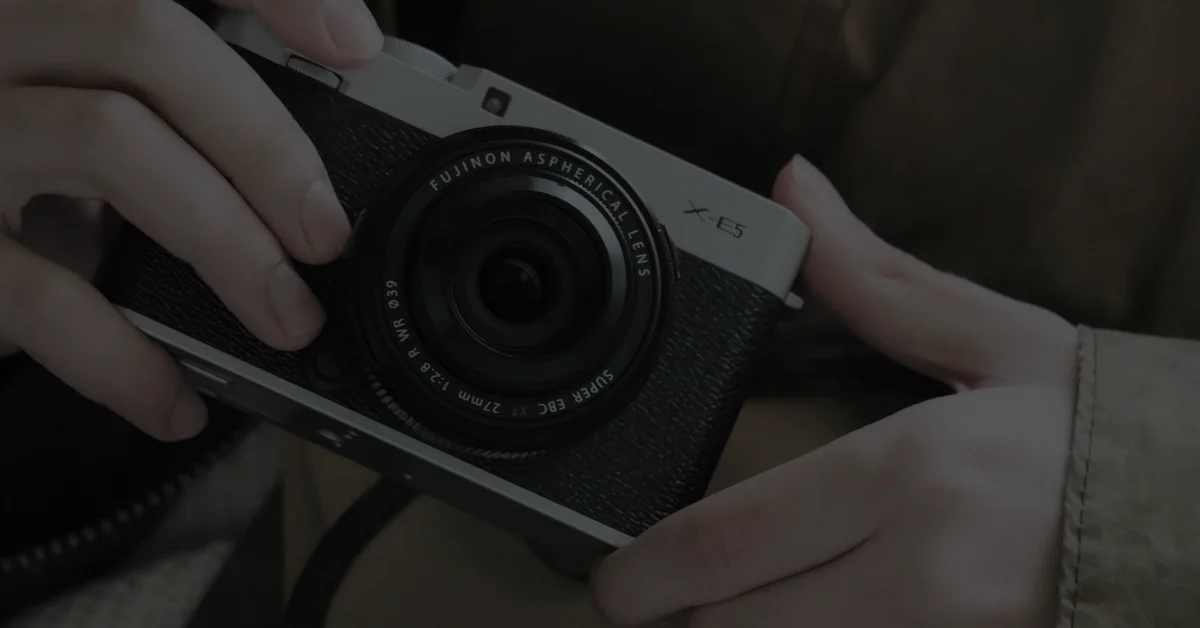
A quiet but passionate war brews in the retro-inspired camera market. The upcoming Fujifilm X-E5 and the rumored OM System OM-5 Mark II are shaping up to be key contenders in this niche - but hotly competitive - arena. Each brings a unique philosophy to design, usability, and image-making, offering photographers a compelling alternative to bulky DSLRs and soulless phone cams.
Let’s dive into what we know - and what we can speculate - with these two retro warriors.
Design Philosophy: Rangefinder Cool vs SLR Classic
Fujifilm has long made waves with its retro rangefinder-style cameras, and the X-E series represents its most compact, street-shooter-friendly line. The X-E5, which will be announced on June 12th, continues that minimalist charm. Think: dial-based controls, a sleek side-mounted EVF, and a body slim enough to slip into a jacket pocket. It’s a digital nod to Leica without the bankruptcy risk.
On the flip side, the OM-5 Mark II, which will be announced on June 17th, stays true to its Olympus OM heritage - traditional DSLR shape, center-mounted viewfinder, and a rugged grip. While the first OM-5 inherited much from the E-M5 Mark III, the Mark II is expected to finally give the series a meaningful update, potentially with a more refined build and controls that make it a joy to use in the field. As I like to say OM5 body, OM1 soul.
Winner: Draw - Depends on your taste. Street photographers may favor the X-E5’s compact, discreet design. Adventure shooters might lean toward the OM-5 mkII’s sturdier, more ergonomic frame.
Sensor and Image Quality
The Fujifilm X-E5 is widely expected to feature the same 40MP X-Trans CMOS 5 sensor found in the X-T5 and X-T50. This would mean exceptional color science, stunning JPEG output, and legendary film simulations like Classic Chrome and Acros baked right in.
The OM-5 Mark II, on the other hand, will likely stick with Micro Four Thirds, possibly with an updated 20MP stacked sensor similar to what’s in the OM-1. While the sensor is smaller, OM System cameras are famous for their computational photography tricks: high-res handheld modes, Live ND filters, and in-body focus stacking.
Winner: Fujifilm X-E5 - For raw image quality and dynamic range, the APS-C sensor simply has more to offer. But OM’s computational chops might still surprise.
Disclaimer: I do own OM1 mkII and it’s one of my most frequently used cameras. I briefly owned Fujifilm X-T50, which unfortunately could not made it and I returned if after 3 weeks of use. In this post I describe this in a greater detail.
Autofocus and Performance
Here’s where things might get spicy. Fujifilm has improved its autofocus steadily, but it still trails behind Sony and Canon. The X-E5 may borrow AI subject-detection AF from the X-T5/X-S20, making it faster and smarter than previous generations.
OM System, however, leads the Micro Four Thirds pack when it comes to real-time performance. If the OM-5 mkII incorporates the same AF algorithms as the OM-1 - think bird/animal detection, blazing fast tracking - then it could be a dream machine for wildlife and action photographers in a tiny body.
Winner: OM-5 Mark II - If the rumors hold, OM’s focus tech and frame rate performance will likely edge out the X-E5 for speed and reliability.
Portability and Lenses
Both cameras are designed for portability, but their ecosystems differ dramatically.
- Fujifilm X-mount offers compact f/2 primes, excellent zooms, and legendary glass like the 35mm f/1.4. It’s a well-rounded system with modern and vintage vibes.
- Micro Four Thirds still boasts the most extensive compact lens lineup in the mirrorless world. From pancake primes to pro telephotos, it’s lightweight versatility defined.
Winner: OM-5 Mark II - For those who value ultra-portable setups with massive lens choice, Micro Four Thirds remains unbeaten.
Video Capabilities
Fujifilm has upped its video game significantly, and the X-E5 is expected to offer 4K 30p 10-bit internal recording, if not 6K open gate. Paired with film simulations, it’s a filmmaker’s sleeper hit.
The OM-5 mkII might support 4K 60p, but its video performance has historically lagged behind rivals. That said, Olympus color science and in-body stabilization are still some of the best for handheld shooting.
Winner: Fujifilm X-E5 - Better codecs, colors, and likely superior overall video capabilities. However, if OM5 inherits OM1’s video capabilities, we may settle on the draw here. If you doubt how serious OM1 can be for video and filmmaking, I invite you to read this post.
Price and Value
Neither camera is expected to be cheap. The X-E5 could launch in the $1199–$1,399 range, depending on the sensor and features. The OM-5 Mark II will likely sit in the same bracket, but bundled kits and OM System’s competitive pricing strategy could give it the edge for budget-conscious buyers.
Winner: Tie - We’ll need final specs and pricing to call this one.
Verdict: Who Wins the Retro Crown?
- Choose the Fujifilm X-E5 if you’re a street photographer, travel shooter, or video creator who wants style, color science, and larger-sensor image quality in a pocketable body.
- Go for the OM-5 Mark II if you’re an outdoor adventurer, nature enthusiast, or want a reliable all-rounder with unmatched stabilization and versatility.
Either way, 2025 is shaping up to be a great year for photographers who want a classic look without sacrificing modern performance. Whether you crave the filmic charm of Fujifilm or the rugged dependability of OM System, your next camera might just turn heads and take beautiful shots doing it.
What do you think - are you Team Fuji or Team OM? Drop your thoughts (and dream specs) in the comments.